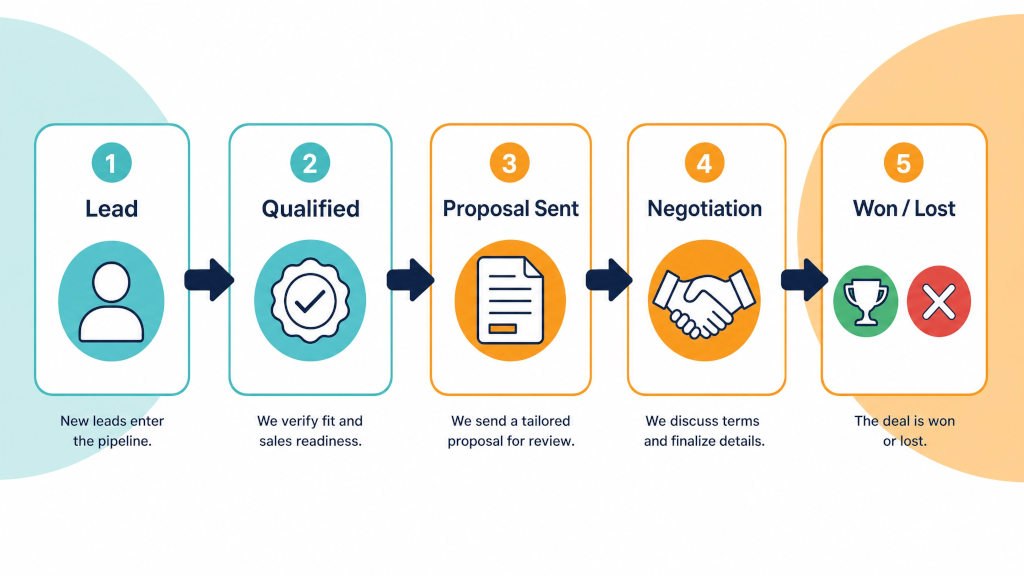

Most businesses that ask us for more leads already have enough of them. The enquiries come in, and then they wait for a call back.
A web form arrives mid-afternoon while the owner is with a client, and the first call back happens the next morning. Nobody decided to ignore the enquiry. But by the next morning, the person who filled in the form may already be talking to someone else.
So before you spend more on ads, look at what happens to an enquiry in the first hour and in the day after it. Most conversion problems start there, and fixing them costs far less than a bigger marketing budget.
An enquiry is the one moment a prospect tells you, without being asked, that they want what you sell. The Lead Response Management Study (Oldroyd, MIT) looked at more than 15,000 leads. It found the odds of qualifying a lead were about 21 times lower when the first response came 30 minutes after the enquiry instead of five minutes. A 2011Harvard Business Review article, The Short Life of Online Sales Leads, found most companies respond far more slowlythan that.

Peter's first rule for inbound enquiries is "speed beats polish". A fast, imperfect reply does better than a perfect one sent hours later. The target in our Sales Process Blueprint is a person on the phone within five minutes of the enquiry, and never later than one hour.
Two rules make that target possible. Every enquiry goes into Pipedrive as a Lead the moment it arrives, from any channel, including phone calls and referrals. And a workflow automation sends the acknowledgement and alerts the person on duty, while a person makes the first call. Someone who has just asked for a price should get a phone call from a person.
"Call them quickly" is easy to agree with and hard to do on a busy day. A written plan for the first day helps. This is the plan we set up for clients:
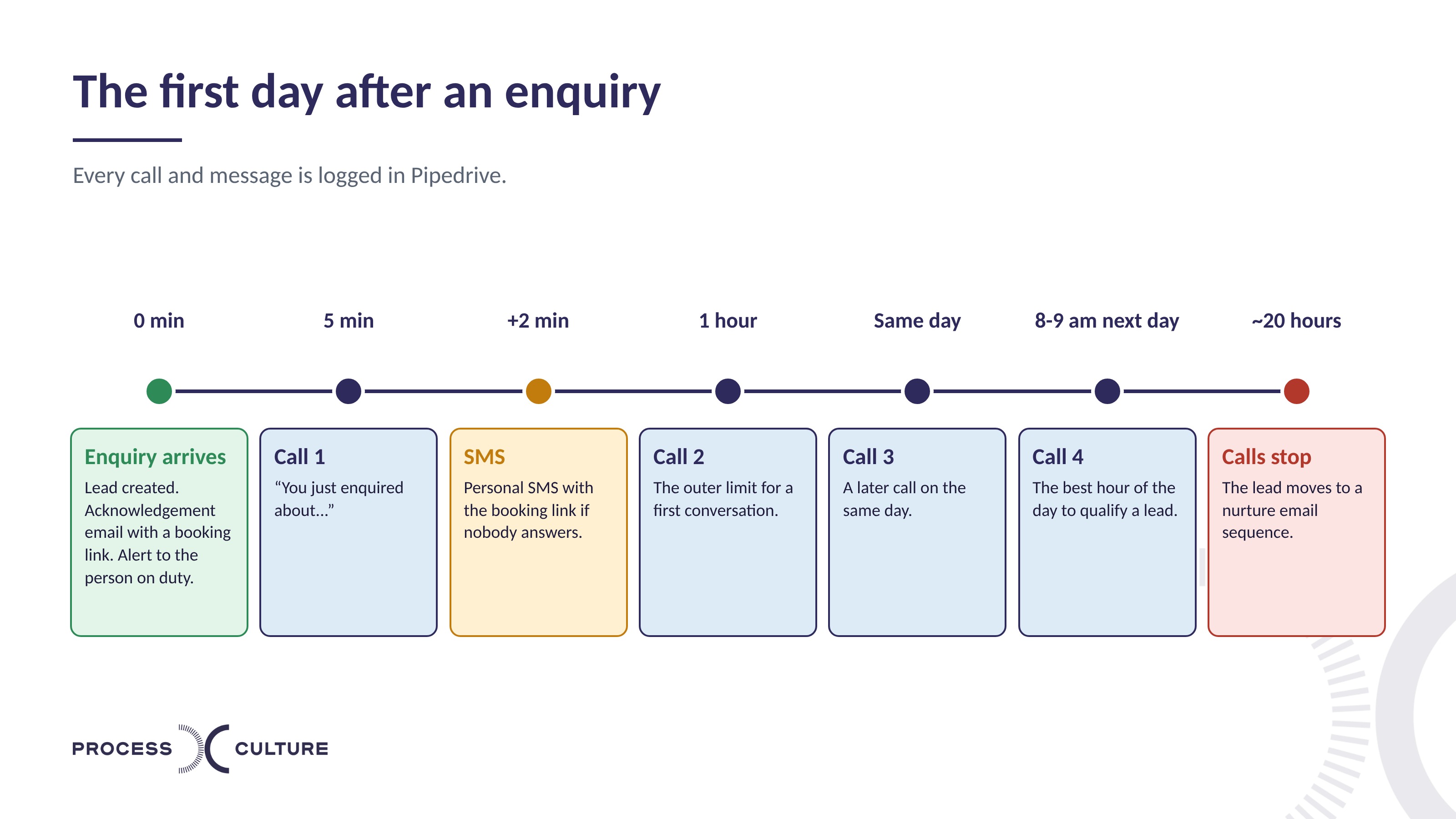
Enquiries that arrive after hours get the acknowledgement straight away, with the time you will call back. Those leads are the first calls in the 8 to 9 am block the next day. The Lead Response Management Study found that block was the best hour of the day to qualify a lead.
Every call and message is logged in Pipedrive as an activity, so the team's response times can be measured.
You can't improve a response time you don't record. Two dates and times are recorded on every Lead: when the enquiry arrived, and when someone first responded. A Make scenario or a workflow automation can fill both fields, so nobody has to type them.
Track two numbers each week. The median time to first contact should be five minutes or less. And at least 90% of leads should be contacted within the hour. If you have not set up the Leads Inbox yet, our three-part Leads Inbox series covers it, including the qualification questions to ask before a Lead is converted to a Deal.
Leads rarely fail in one moment. A call goes unanswered and the next activity slips by a week. Three months later the lead is still open and nobody is working on it.
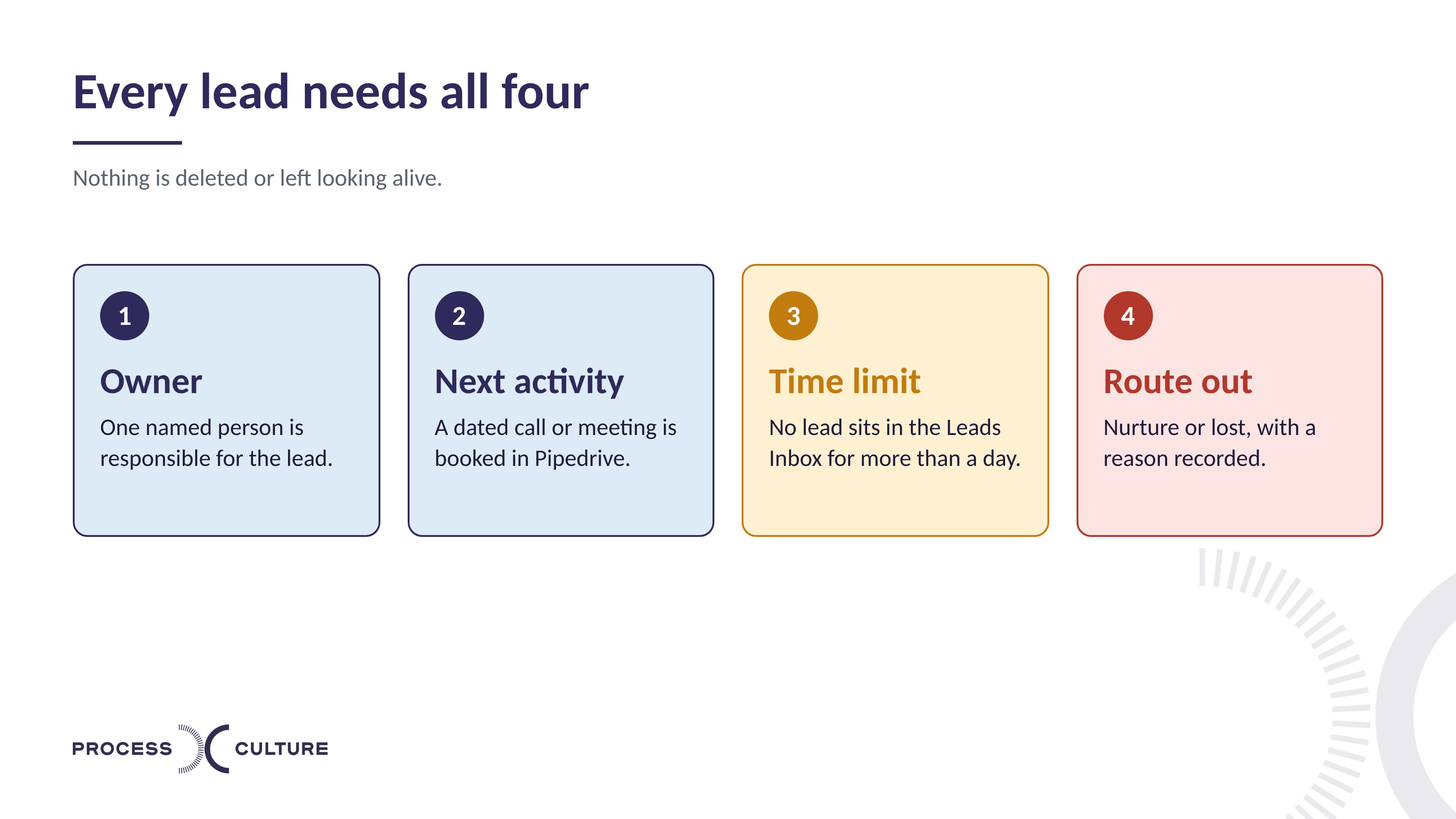
Every lead needs an owner, a next activity, a time limit and a route out. In our blueprint, no Lead sits in the Leads Inbox for more than a day. If a lead stalls, it goes to nurture or it is closed, and a reason is recorded either way. The rule we build every account around is that nothing is deleted or left looking alive.
A Lead that will not go ahead is archived with an archive reason. A Deal that does not close is marked Lost with a lost reason, and each lost reason has a next step:

After a few months, those reasons show you why leads are not converting, which is a better guide than a guess.
Pull your last 20 enquiries and check two figures for each one: how long the enquiry waited for a first call, and whether it ended with a recorded outcome. Because those two figures describe what happens after the enquiry arrives, they will tell you more about your conversion rate than your lead volume does. For stage design and the case for fewer pipeline stages, see How to build a high-converting sales pipeline.
Want help setting this up in Pipedrive? Book a 30-minute call with Peter. Process Culture is an Authorized Pipedrive Partner.
If you know your sales process, you can do days 1 to 3 in a couple of hours. If you are not sure what your stages should be, that is exactly what the free one-hour set-up call is for.
Pipedrive is a sales CRM. It is used to track every enquiry, quote and deal through the stages of a sales process, log the calls and emails against each one, and schedule the next follow-up so nothing is missed. It is built for selling, not for marketing or support.
No. There is a free trial, then it is paid software. There is no free tier that runs forever.