A sales pipeline should make it easier to understand what’s happening across the business. But for many teams, the opposite slowly happens. Processes become more complicated, reporting becomes less reliable, and opportunities start sitting untouched for weeks at a time.
I see this a lot with growing businesses - especially teams with multiple sales reps making updates to the CRM. A pipeline starts out simple enough, usually a few stages and a clear process. But over time, more admin gets added, more stages appear, and different people start managing deals in different ways.
Eventually the CRM stops providing clarity and starts creating friction instead. Team members leave and new ones arrive - each with their own view of the ideal pipeline. Over time no-one really understands why the Pipeline looks like it does.
Deals sit untouched for weeks. I've seen many Pipelines where deals are fully "rotten" - with no activity occuring for many months. Sometimes years.. Reporting becomes unreliable. Forecasting depends more on instinct than visibility.
A good sales pipeline should make it easier to understand where deals are progressing, where they’re slowing down, and what needs attention next. It should support consistent follow-up without creating unnecessary admin overhead.
“A great pipeline doesn’t just track deals. It shows your team exactly what needs attention next.” (Sydney web design agency - conversion specialist Irwin Hau)
A lot of businesses treat their CRM as a place to store opportunities. - or as a static database of contact data. In reality, a CRM should function more like an operational tool that helps the business understand momentum, activity, and next steps.
Within a CRM, a well-designed pipeline creates visibility across the sales process. It helps teams understand which opportunities are moving forward, where deals tend to stall, and how predictable upcoming revenue is.
Without that visibility, sales activity often becomes reactive. Follow-up relies on memory, opportunities get overlooked, and managers struggle to get a clear picture of what’s happening across the business.
Interestingly, this usually isn’t a technology problem. Most businesses already have the tools they need. The issue is often that the pipeline itself has become cluttered or inconsistent over time. Often there's a significant lack of understanding of the sales process itself - and a lack of alignment between the sales process and the CRM sales pipeline.
The more complicated the process becomes, the harder it is for teams to use it consistently. And once consistency drops, reporting quality tends to drop with it.
One of the biggest mistakes businesses make is designing their pipeline around internal admin instead of customer behaviour and the core sales process itself.
You can usually spot this when pipeline stages start reflecting internal tasks rather than meaningful sales progression. Or Pipeline stages are used to represent activities - such as short and long term follow up (better modelled as activities in Pipedrive CRM., for example)
Internal activities still matter, but they generally work better as tasks or notes inside the CRM rather than separate pipeline stages.
A useful rule of thumb is this:
“If a customer wouldn’t recognise the difference between two stages, they probably shouldn’t be separate stages.”
Another common issue is stage overload. I sometimes see pipelines with 15 or 20 stages (which is less than ideal - especially when you have to scroll to gain visibility), many of which are interpreted differently by different team members. Eventually people start skipping stages altogether or updating deals inconsistently just to keep the system moving.
The flow-on effect is usually predictable. Reporting becomes unreliable, forecasting weakens, and sales meetings become harder to run because nobody fully trusts the data.
The businesses getting the best results from their CRM are rarely the ones with the most complicated setup. More often, they’re the ones with a clear process that everyone actually follows.
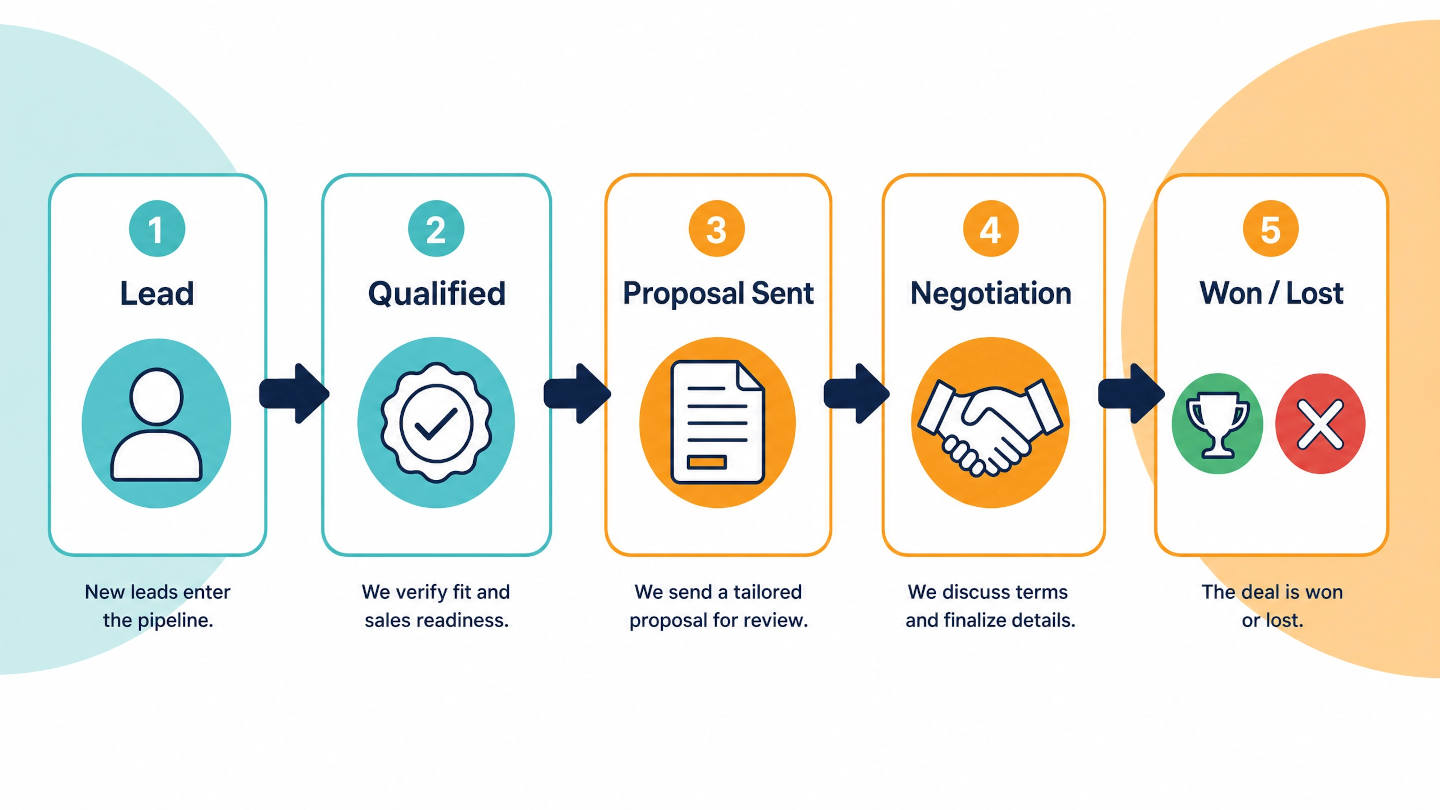
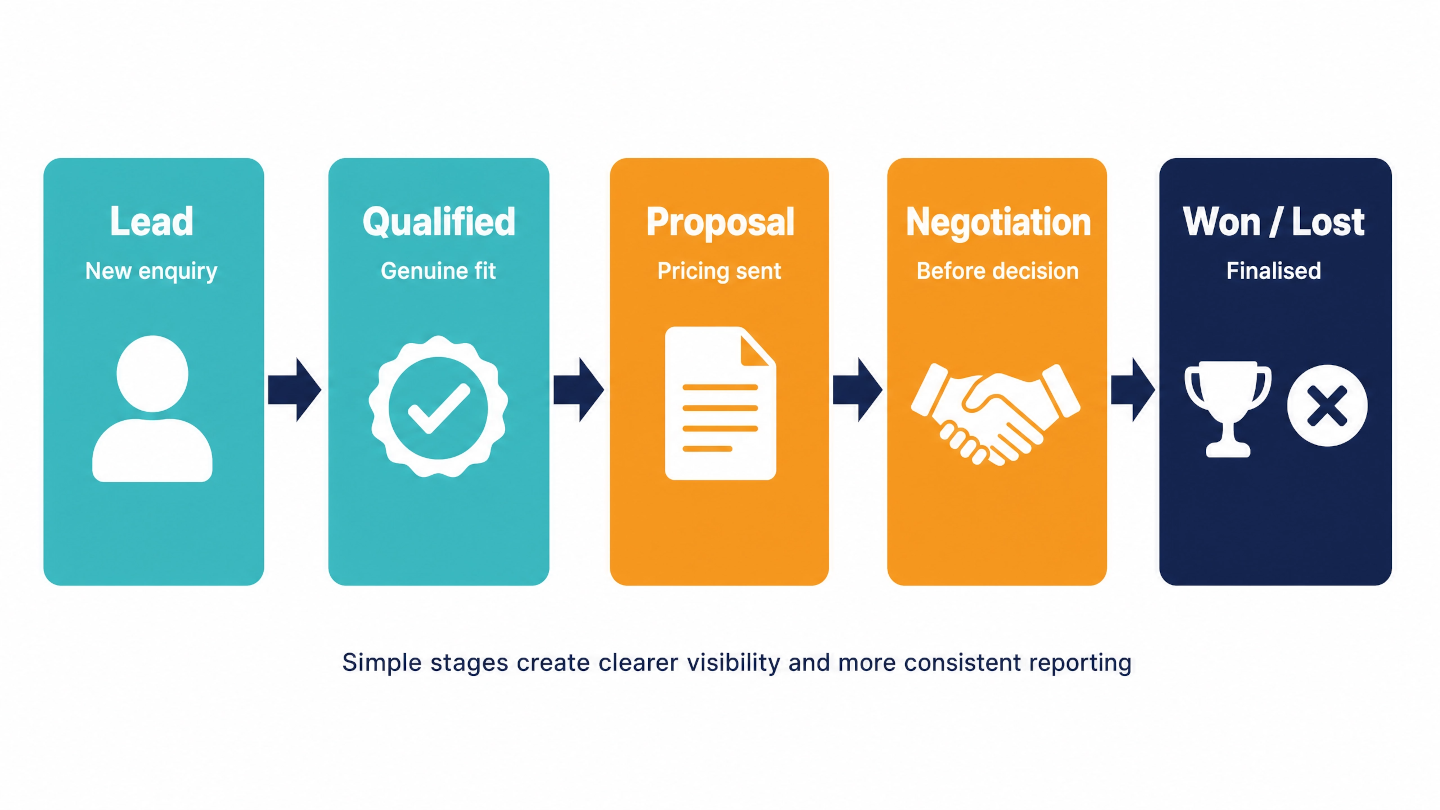
A better approach is to structure your pipeline around how customers actually buy. Most businesses only need a handful of meaningful stages that reflect genuine progression in the buying journey.
Example Simple Pipeline Structure
This kind of structure is usually easier to manage, easier to report on, and easier for teams to adopt consistently.
Here's an example of a B2B Pipeline that I often set up for clients and one in use personally (screen capture from my Pipedrive demo account)
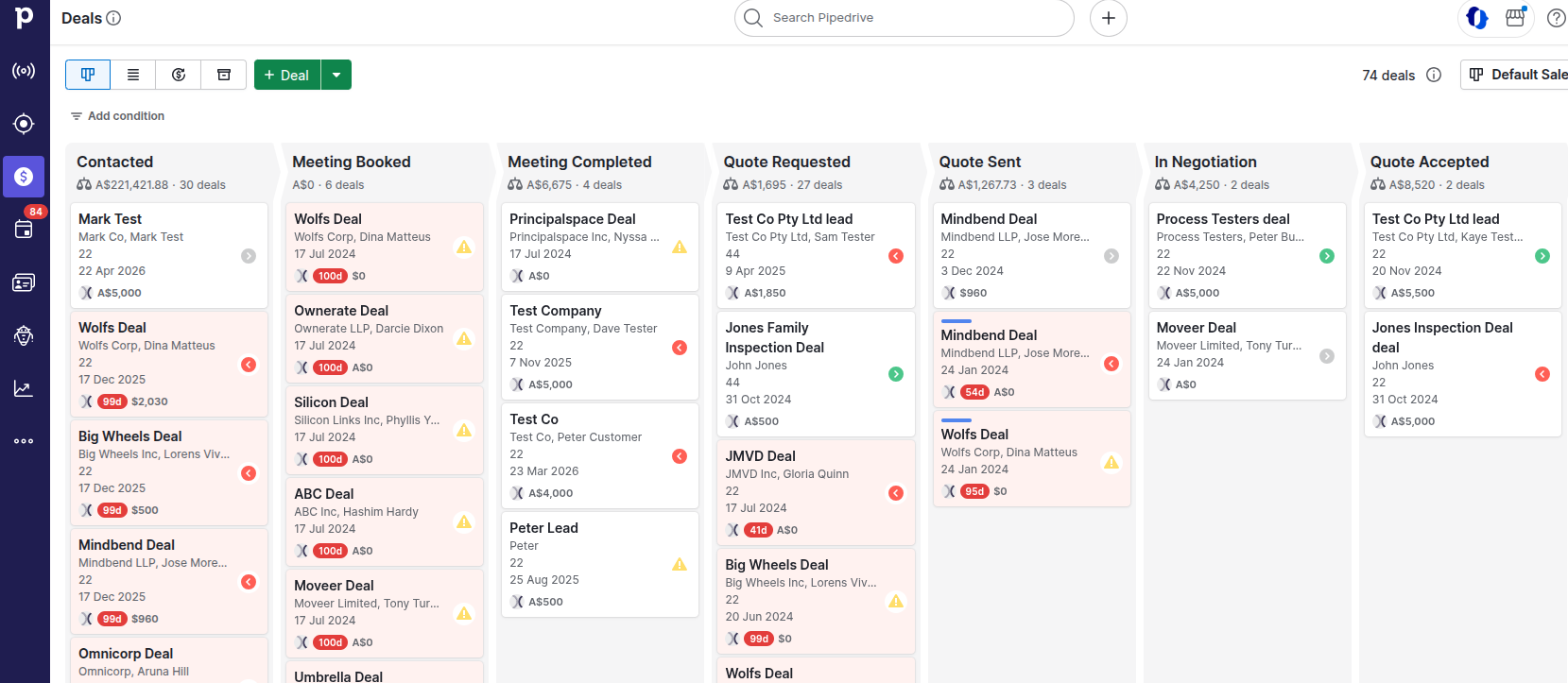
The pipeline itself only needs to answer one core question: Where does this opportunity currently sit in the buying journey? Once that becomes clear, reporting improves naturally because everyone is working from the same understanding.
There’s often a temptation to build the “perfect” pipeline before the team even starts using it properly, but in practice, simpler systems almost always perform better.
A smaller number of clearly defined stages tends to improve consistency because the process becomes easier to follow day to day. Teams spend less time managing the CRM and more time progressing opportunities. This is particularly important for growing businesses where sales processes are still evolving. Over-engineering the pipeline too early usually creates more admin than value.
Simple pipelines also create cleaner reporting. When stage definitions are clear and consistently applied, forecasting becomes more reliable and bottlenecks become easier to identify.
A pipeline without follow-up discipline quickly becomes a list of old conversations. This is where many sales processes start to break down. The issue usually isn’t a lack of leads but an inconsistent follow-up after initial contact.
Good pipelines make the next steps visible. Every active opportunity should have a clear action attached to it, whether that’s a scheduled call, proposal review, meeting, or follow-up conversation.
One of the simplest operational improvements businesses can make is reviewing deals that have no future activity scheduled. Those opportunities are often the first sign that momentum is slowing down. Small process improvements like this can have a surprisingly large impact over time.
A sales pipeline shouldn’t remain static forever.
As businesses grow, services evolve, and customer behaviour changes, the pipeline should adapt too. That doesn’t mean rebuilding the system every few months, but it is worth regularly reviewing where deals tend to stall and whether stages still reflect the way customers actually buy.
Good operational systems evolve gradually, and the best pipelines are rarely the most sophisticated. They’re usually the clearest, easiest to follow, and most consistently used across the business.
A good sales pipeline shouldn’t feel difficult to manage. It should create clarity, support consistent follow-up, and make it easier to understand what’s happening across the sales process.
The goal isn’t to create more admin, but to create a system that helps the business make better decisions and manage opportunities more consistently as it grows. If your current pipeline feels overly complicated, inconsistent, or difficult to maintain, simplifying the process is often the best place to start.
Sometimes a few small process improvements can make a big difference to visibility and consistency across a sales team. That’s the kind of work Process Culture helps businesses with every day.
If you'd like to get help optimising your own sales pipeline, book a free 30 minute sales process review call.